
- 阻害剤
- 研究分野別
- PI3K/Akt/mTOR
- Epigenetics
- Methylation
- Immunology & Inflammation
- Protein Tyrosine Kinase
- Angiogenesis
- Apoptosis
- Autophagy
- ER stress & UPR
- JAK/STAT
- MAPK
- Cytoskeletal Signaling
- Cell Cycle
- TGF-beta/Smad
- 化合物ライブラリー
- 抗体
- 新製品
- お問い合わせ

HCV
HCV製品
- All (8)
- HCV阻害剤 (8)
- 新製品
| 製品コード | 製品名称 | 製品説明 | 文献中Selleckの製品使用例 | お客様のフィードバック |
|---|---|---|---|---|
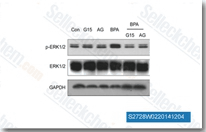
| S2728 | AG-1478 | AG-1478 is a selective EGFR inhibitor with IC50 of 3 nM in cell-free assays, almost no activity on HER2-Neu, PDGFR, Trk, Bcr-Abl and InsR. AG-1478 (Tyrphostin AG-1478) inhibits encephalomyocarditis virus (EMCV) and hepatitis c virus (HCV) by targeting phosphatidylinositol 4-kinase IIIα (PI4KA). |
|
|
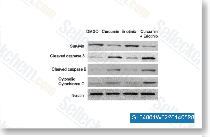
| S1848 | Curcumin | Curcumin (Diferuloylmethane, Natural Yellow 3, Turmeric yellow) is the principal curcuminoid of the popular Indian spice turmeric, which is a member of the ginger family (Zingiberaceae). It is an inhibitor of p300 histone acetylatransferase(IC50~25 μM)and Histone deacetylase (HDAC); activates Nrf2 pathway and supresses the activation of NF-κB. Curcumin induces mitophagy, autophagy, apoptosis, and cell cycle arrest with antitumor activity. Curcumin reduces renal damage associated with rhabdomyolysis by decreasing ferroptosis-mediated cell death. Curcumin exhibits anti-infective properties against various human pathogens like the influenza virus, hepatitis C virus, HIV and so on. |
|
|
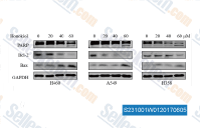
| S2310 | Honokiol | Honokiol is the active principle of magnolia extract that inhibits Akt-phosphorylation and promotes ERK1/2 phosphorylation. Honokiol causes G0/G1 phase arrest, induces apoptosis, and autophagy via the ROS/ERK1/2 signaling pathway. Honokiol inhibits hepatitis C virus (HCV) infection. Phase 3. |
|
|
| S8133 | Resiquimod (R-848) | Resiquimod (R-848, S28463) is an immune response modifier that acts as a potent TLR 7/TLR 8 agonist that induces the upregulation of cytokines such as TNF-α, IL-6 and IFN-α. Resiquimod reduces hepatitis C virus (HCV) infection. Phase 2. | ||
| S1384 | Mizoribine | Mizoribine is an imidazole nucleoside and an immunosuppressant that inhibits HCV RNA replication with IC50 of ~ 100 μM for anti-HCV activity. Mizoribine is a selective inhibitor of inosine-5'-monophosphate dehydrogenase (IMPDH) and guanosine monophosphate synthetase. Mizoribine also inhibits SARS-CoV. | ||
| S6689 | Merimepodib | Merimepodib (Merimempodib, MMPD, VI-21,497, VX-497) is a potent, specific, and reversible inosine monophosphate dehydrogenase(IMPDH) inhibitor with antiviral activity against hepatitis C virus (HCV) and a variety of DNA and RNA viruses in vitro.Merimepodib is an immunosuppressive agent. | ||
| S0349 | Inarigivir soproxil | Inarigivir soproxil (GS 9992, SB 9200) is an oral agonist of innate immunity that is believed to act via the activation of the RIG-I and NOD2 pathways. Inarigivir soproxil has broad-spectrum antiviral activity against RNA viruses with EC50 of 2.2 μM and 1.0 μM for HCV 1a and HCV 1b. | ||
| E6581New | Mipomersen | Mipomersen (ISIS 301012 free base) is an antisense oligonucleotide inhibitor of apolipoprotein B-100 (apoB-100) that causes selective degradation of apoB-100 mRNA, thereby inhibiting protein translation. This leads to reductions in low-density lipoprotein cholesterol (LDL-C) and other apoB-containing lipoprotein levels. Mipomersen is used as an adjunct treatment for homozygous familial hypercholesterolemia (FH). | ||
| S2728 | AG-1478 | AG-1478 is a selective EGFR inhibitor with IC50 of 3 nM in cell-free assays, almost no activity on HER2-Neu, PDGFR, Trk, Bcr-Abl and InsR. AG-1478 (Tyrphostin AG-1478) inhibits encephalomyocarditis virus (EMCV) and hepatitis c virus (HCV) by targeting phosphatidylinositol 4-kinase IIIα (PI4KA). |
|
|
| S1848 | Curcumin | Curcumin (Diferuloylmethane, Natural Yellow 3, Turmeric yellow) is the principal curcuminoid of the popular Indian spice turmeric, which is a member of the ginger family (Zingiberaceae). It is an inhibitor of p300 histone acetylatransferase(IC50~25 μM)and Histone deacetylase (HDAC); activates Nrf2 pathway and supresses the activation of NF-κB. Curcumin induces mitophagy, autophagy, apoptosis, and cell cycle arrest with antitumor activity. Curcumin reduces renal damage associated with rhabdomyolysis by decreasing ferroptosis-mediated cell death. Curcumin exhibits anti-infective properties against various human pathogens like the influenza virus, hepatitis C virus, HIV and so on. |
|
|
| S2310 | Honokiol | Honokiol is the active principle of magnolia extract that inhibits Akt-phosphorylation and promotes ERK1/2 phosphorylation. Honokiol causes G0/G1 phase arrest, induces apoptosis, and autophagy via the ROS/ERK1/2 signaling pathway. Honokiol inhibits hepatitis C virus (HCV) infection. Phase 3. |
|
|
| S8133 | Resiquimod (R-848) | Resiquimod (R-848, S28463) is an immune response modifier that acts as a potent TLR 7/TLR 8 agonist that induces the upregulation of cytokines such as TNF-α, IL-6 and IFN-α. Resiquimod reduces hepatitis C virus (HCV) infection. Phase 2. | ||
| S1384 | Mizoribine | Mizoribine is an imidazole nucleoside and an immunosuppressant that inhibits HCV RNA replication with IC50 of ~ 100 μM for anti-HCV activity. Mizoribine is a selective inhibitor of inosine-5'-monophosphate dehydrogenase (IMPDH) and guanosine monophosphate synthetase. Mizoribine also inhibits SARS-CoV. | ||
| S6689 | Merimepodib | Merimepodib (Merimempodib, MMPD, VI-21,497, VX-497) is a potent, specific, and reversible inosine monophosphate dehydrogenase(IMPDH) inhibitor with antiviral activity against hepatitis C virus (HCV) and a variety of DNA and RNA viruses in vitro.Merimepodib is an immunosuppressive agent. | ||
| S0349 | Inarigivir soproxil | Inarigivir soproxil (GS 9992, SB 9200) is an oral agonist of innate immunity that is believed to act via the activation of the RIG-I and NOD2 pathways. Inarigivir soproxil has broad-spectrum antiviral activity against RNA viruses with EC50 of 2.2 μM and 1.0 μM for HCV 1a and HCV 1b. | ||
| E6581New | Mipomersen | Mipomersen (ISIS 301012 free base) is an antisense oligonucleotide inhibitor of apolipoprotein B-100 (apoB-100) that causes selective degradation of apoB-100 mRNA, thereby inhibiting protein translation. This leads to reductions in low-density lipoprotein cholesterol (LDL-C) and other apoB-containing lipoprotein levels. Mipomersen is used as an adjunct treatment for homozygous familial hypercholesterolemia (FH). | ||
| E6581New | Mipomersen | Mipomersen (ISIS 301012 free base) is an antisense oligonucleotide inhibitor of apolipoprotein B-100 (apoB-100) that causes selective degradation of apoB-100 mRNA, thereby inhibiting protein translation. This leads to reductions in low-density lipoprotein cholesterol (LDL-C) and other apoB-containing lipoprotein levels. Mipomersen is used as an adjunct treatment for homozygous familial hypercholesterolemia (FH). |


納期 国内在庫品:受注日の翌日(15時までの受注分) *北海道、九州、沖縄への配送は受注日より2日以上 を要する場合あり 海外在庫品:受注後1〜2週間